Before she was flattened through the photographic process, The "Mujer Arrodillada" was a polychrome ceramic figure from Ixtlán del Río in the modern-day Mexican state of Nayarit (300 BCE–300 CE), where she was found in the burial chamber of a shaft tomb. She was placed around generations of ancestors along with other funerary finery such as precious stone, amate paper, and other ceramic wares. Her neck and bare chest are adorned with a “y” shaped necklace that leads down to her hands tucked beneath her breasts. The shell-shaped earrings dangling from her lobes signify the bounty of the sea from which the people who inhabited this coastal region sustained themselves for millennia. After being removed from her original context and purpose, she was sold to none other than Diego Rivera, artist and intellectual aligned with an Indigenous construction of nationalism undertaken by the Mexican government in the 20th century.1 The same entity would financially back the book she was torn out of to make one of the collages in Felipe Baeza’s 2017 Gente del Occidente de México series (Figure 1).
Felipe Baeza, Gente del Occidente de México (2017–2019)
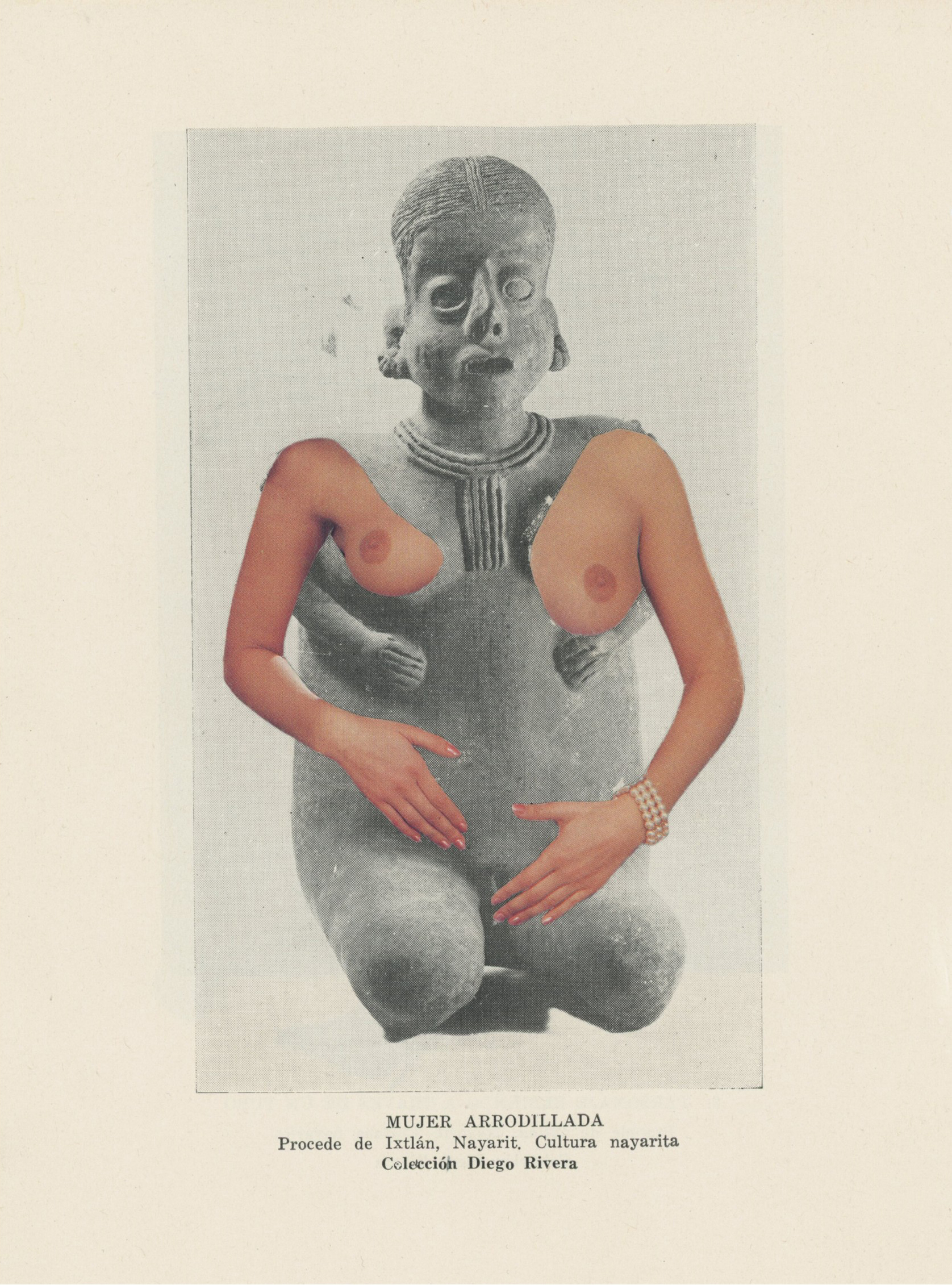
Fig. 1 – Felipe Baeza, "Mujer Arrodillada," from the series Gente del Occidente de México, 2017-2019. Double-sided collage on paper, 8 3/4 x 6 3/8 in. [Link to source]
Baeza combines images of West Mexican ceramics with those from erotic magazines to create a body of work comprising forty-one double-sided collages, eighty-two images total. The series was first inspired by the artist’s trip to a bookstore in New York City, where he came across a dusty old survey text titled Arte Precolombino del Occidente de Mexico. The low contrast black-and-white images in this book were a culmination of months of photographing the collections of Rivera, Manuel Álvarez Bravo, and the Museo Nacional de Antropología at the behest of the Mexican government. By merging these images with glossy, full-color bodies from erotic magazines, their forms, though fragmented, are reawakened, mouths agape, ready to tell the story of their transformation.
The Gente Del Occidente de Mexico series was an opportunity for Baeza to explore the decontextualization and commodification of Precolumbian ceramics on the art market in conversation with the simultaneous exploitation of Indigenous and Brown bodies. This essay investigates how the artist addresses these dual objectifications by emphasizing common humanistic concerns centered on the body. I argue the waywardness of his fragmented figures expresses resistance to their previous characterizations, asking the viewer to contend with their respective positions within these discourses. For the purposes of this essay, I will focus on a few select images out of this extensive series.
As a student of renowned Mesoamericanist Mary Miller, Baeza was keenly aware of the political motives behind relocating ceramics from all of Mexico, including those from West Mexico, to its capital.2 Following the revolution, the Mexican government sought to create national unity centered on Mexico City, the former Mexica capital of Tenochtitlan and home to the governmental palaces and the Museo Nacional de Antropología. The museum was the location that housed most of Mexico’s Indigenous art, placed under the label of “patrimonio,” and now considered to be property of the State.3 Governmental interest in uniting Mexico through the appropriation of its Indigenous past therefore resulted in the decontextualization of ancestral items. A rise in archaeological projects in the 20th century involved the removal of items such as jewelry, carved seashells, and the ceramics that form half of Baeza’s source material in the examples discussed in this essay.
Artists invested in nationalism after the revolution were known to be attracted to West Mexican ceramics for a few reasons: their supposed representations of everyday life, as well as their materiality connecting to a primitivist view of an untouched, supposedly pure, past. Rivera and Frida Kahlo together amassed a collection of over sixty thousand items mostly from this region, and both appropriated art from West Mexico in their own work. Upon Rivera’s death, these ceramics were supposedly given back to the people of Mexico in the form of the Museo Anahuacalli. As previously mentioned, items from this collection were photographed in 1946 as part of a book project spearheaded by the Mexican government, seeking to recreate a holistic presentation of items systematically removed from their original context as a celebration of national heritage.
During my interview exchange with Baeza about his series reflecting on this nationalized book project, he attended greatly to its purpose in shaping Mexican identity: "Part of the process of this identity project was to look into the past as something to be in the present. A lot of the objects in the book were very specific and desirable objects that became desirable because of this book and owned by intellectuals at that time...For me it made me think about what it is like to reanimate these objects that have been taken out of context, especially as these objects became objects of desire as they were extracted and market driven.”4 West Mexican items hitting the art market eventually found their way into popular culture in the form of television cameos and Kahlua ads. The example pictured here merely hints at their role in American popular culture as symbols of a pre-modern authentic life and as crude humor. Ads like the one seen here project to the viewer a sense of pleasure, simpler times, and memories of past vacations to tropical lands (Figure 2).5
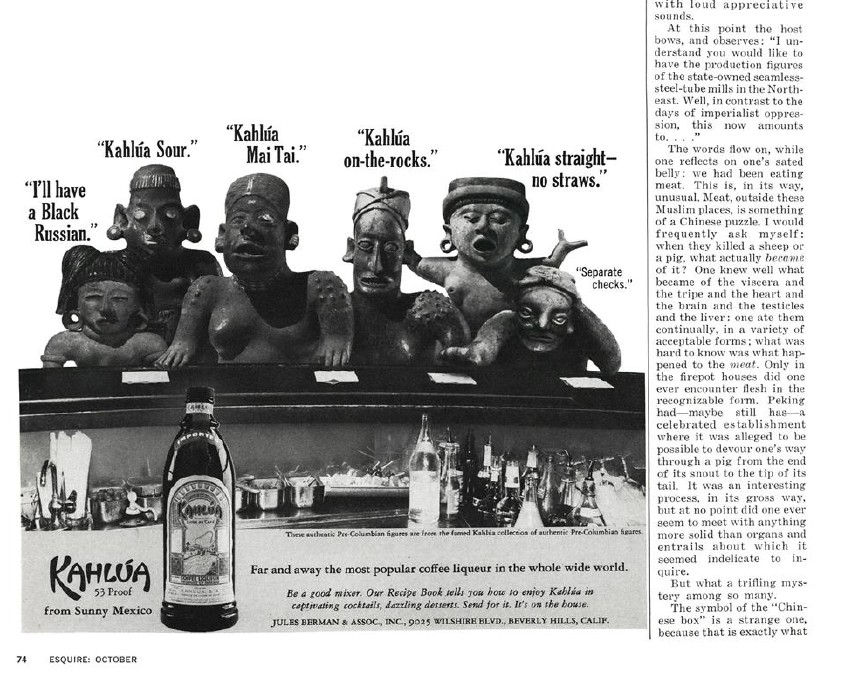
Fig. 2 – Kahlúa advertisement, Esquire vol. 66, no. 4 (Oct. 1966): p. 74. [Link to source]
The presence of West Mexican items in popular culture reflects their excessive availability on the market, driven by alternative methods of procurement such as looting as well as the proliferation of fakes and replicas. This phenomenon, rooted in postwar Mexico’s wealth inequality, continues today. Cultural heritage sites across West Mexico in particular are pockmarked with holes from unsanctioned extractive projects. These holes represent not only the removal of items from their context, but the exploitation of human labor and the commodification of culture in the process of creating profit from the illicit trade of ancestral heritage. Huaqueros are people tasked with executing unsanctioned digs in the blistering sun while gallerists (often situated across the US/Mexico border) await the arrival of new inventory.6 These workers are paid nominal fees and incur the most risk in pursuit of feeding their families. The two-fold exploitation of West Mexican ceramics and the people charged with exhuming them are at the heart of Baeza’s series.
In an email exchange with the artist, he said, “I am attracted to the images/works themselves and forcing them to have a conversation through the print process to make a new archival document.”7 It should be noted that the reuse of Mesoamerican imagery appears in the visual record in cycles from the seventeenth century to today, and Baeza’s work reflects a nuanced awareness of this tradition. Seeking to highlight the tension between eroticism and commodification of the physical body and the concept of indigeneity, Baeza also invites conversation about how we perceive these images and who owns them. In the same chain of correspondence, the artist said “I was interested to juxtapose these two different images to reanimate those titles too. These objects have been taken out of context and now they're in a very different conversation, but you also see the body dismembered and the body becomes an object too. We start seeing the body as something else.”8
The title, "Mujer Arrodillada," translates to "kneeling woman." While the ancient context delivered earlier lends itself to an interpretation of reverence, the artist’s reanimation of this figure acknowledges its removal from context as desacralizing, rendering it static in its place of relocation. Through the medium of collage, Baeza attempts to force a new conversation by layering the breasts and arms of a modern woman from an erotic magazine directly over the kneeling figure. The edge created by the artist’s scalpel is not arbitrary. Baeza carefully crafts a space in which the flesh arms of the model peak through the ceramic, activating it. They are directly connected to another set of arms, reaching down towards the genitals quite ambiguously. Is the hand covering intimate body parts out of modesty, or engaging in a rebellious act of exhibitionist masturbation? The wide eyes and open mouth add to this visual double entendre.
Perhaps it could be said that the ancient ceramic is sexualized by the erotic magazine, or that the former exoticizes the latter by invoking indigeneity in the vein of the early modernists. Instead of dissecting these elements, reading them together reveals another interesting perspective. The pose and expression of the "Mujer Arrodillada" bears similarities with another ancient sculpture, that of the Aphrodite of Knidos (Figure 3). This classical Greek sculpture is sewn directly into Western art historical canons that dictate what is considered great art. Presenting the "Mujer Arrodillada" in conversation with this work places West Mexican ceramics, erotic photography, and classical Greek sculpture on the same field of human experience, inviting the viewer to grapple with the tensions of their juxtaposition, as the erotic magazine exists in the realm of art while its disjointed limbs assert agency by rebelling, leaping out of the frame, and confronting the viewer.
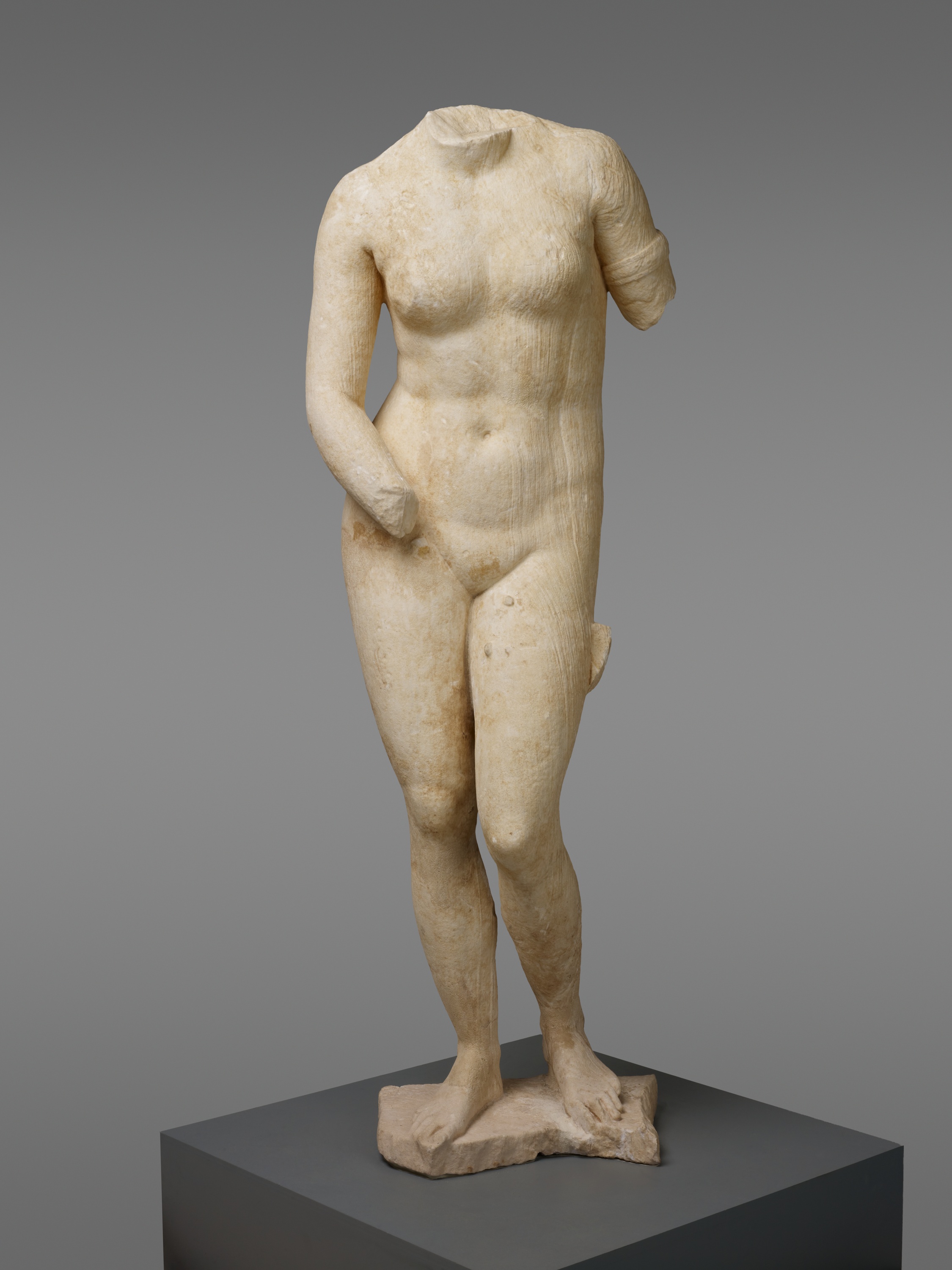
Fig. 3 – Roman copy of the Aphrodite of Knidos, 2nd century. Marble, 168 x 57.2 x 42 cm. Art Institute of Chicago, Chicago, 1981.11. [Link to source]
"Musico o Jugador de Pelota" illustrates another interesting set of tensions. In the foreground of the composition, we have materials gathered from two separate magazines, the first of which features a disembodied bare chest of a masculine figure whose arm reaches down to cup the basketball poking slightly out of frame (Figure 4). On the right, we have a bejeweled hand adorned with French tips nearly grazing the bare chest and applying pressure to the abdomen as the mouth of the figure opens as if ready to begin belting a tune. Baeza's source material correlates humorously to the vague title, "musician or ball player," assigned to the photograph of this ceramic, invoking a scene of collections managers or registrars scrambling to reattribute the identity of this figure after its removal from context. Items such as the Colima ceramics that make their way to prop houses, museums, and private collections could be referred to as refugees, in the legacy of Arjun Appadurai. Taking the social life of objects into consideration, his seminal essay “Museum Objects as Accidental Refugees” points out, “in the case of ethnological objects, which end up in Western museums, these object biographies and social lives are tied up with complex histories in which empire, science, the market and Western popular curiosity all play some significant role.”9 Baeza's appropriation of this title directly relates to its social life. Though made placeless, torn between designations, its reanimation through collage suggests new potential in forced collaborations. Flesh-toned arms newly attached, this figure can now be both the ball player, and the musician.
During an interview with Laura Gutiérrez at the Getty Institute, Baeza briefly discussed the impact Saidiya Hartman had on his art, especially her work titled Wayward Lives, Beautiful Experiments: Intimate Histories of Social Upheaval.10 The book combines archival work and text to call attention to how Black women’s sexuality was viewed through an ideology of criminality during the twentieth century. Hartman refers to the so-called deviant behaviors as “wayward” to demonstrate how women of color move through society despite systematic efforts to control their social lives.11 The Musico o Jugador de Pelota’s potential to do both music and sport as opposed to being rendered static as a result of the loss of part of its social history directly relates to the artist’s vision for this series to produce a new archival document, one in which the figures are afforded the ability to rebel despite systematic efforts to control their histories.
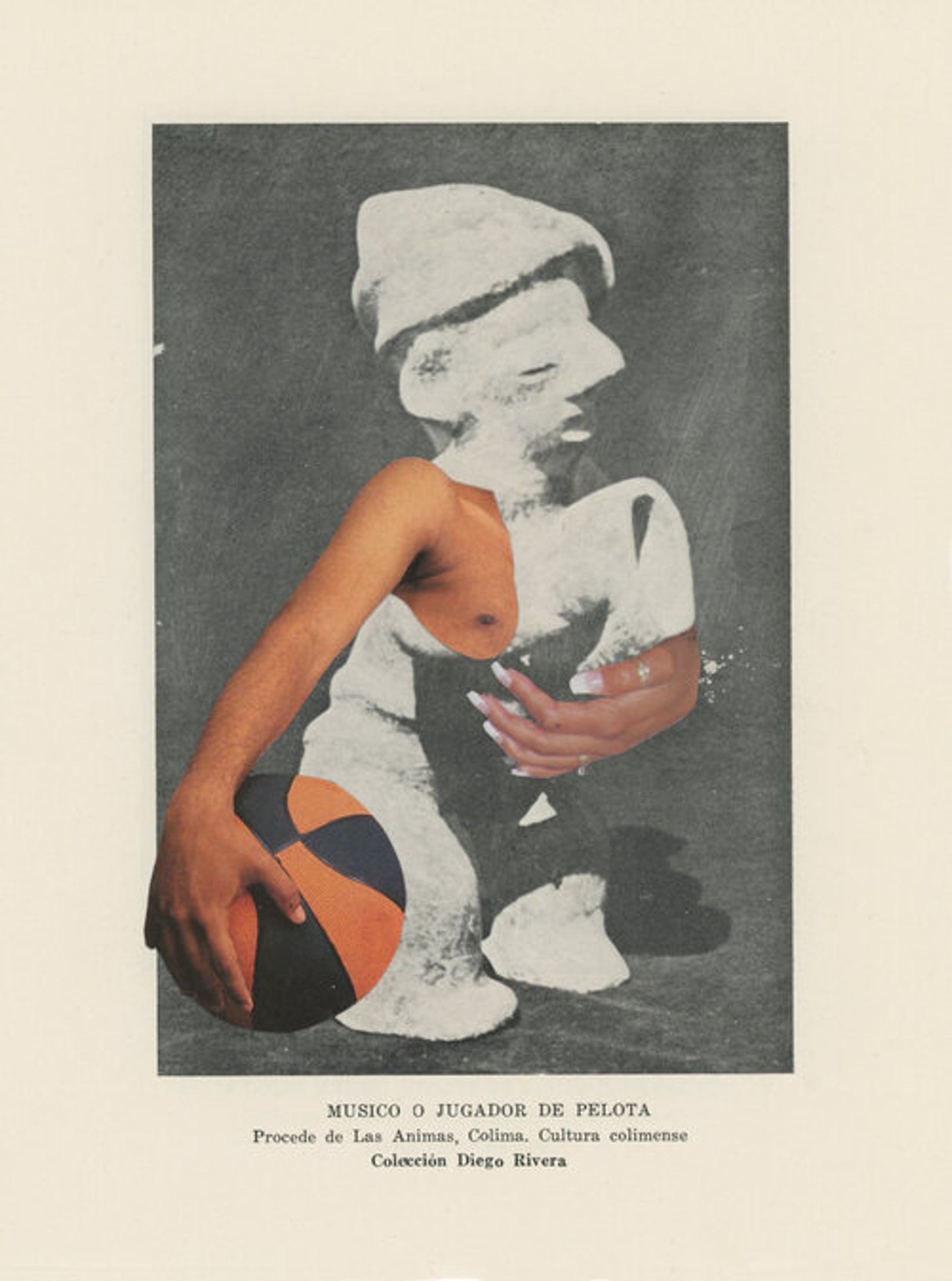
Fig. 4 – Felipe Baeza, "Musico o Jugador de Pelota," from the series Gente del Occidente de México, 2017–2019. Double-sided collage on paper, 8 3/4 x 6 3/8 in. [Link to source]
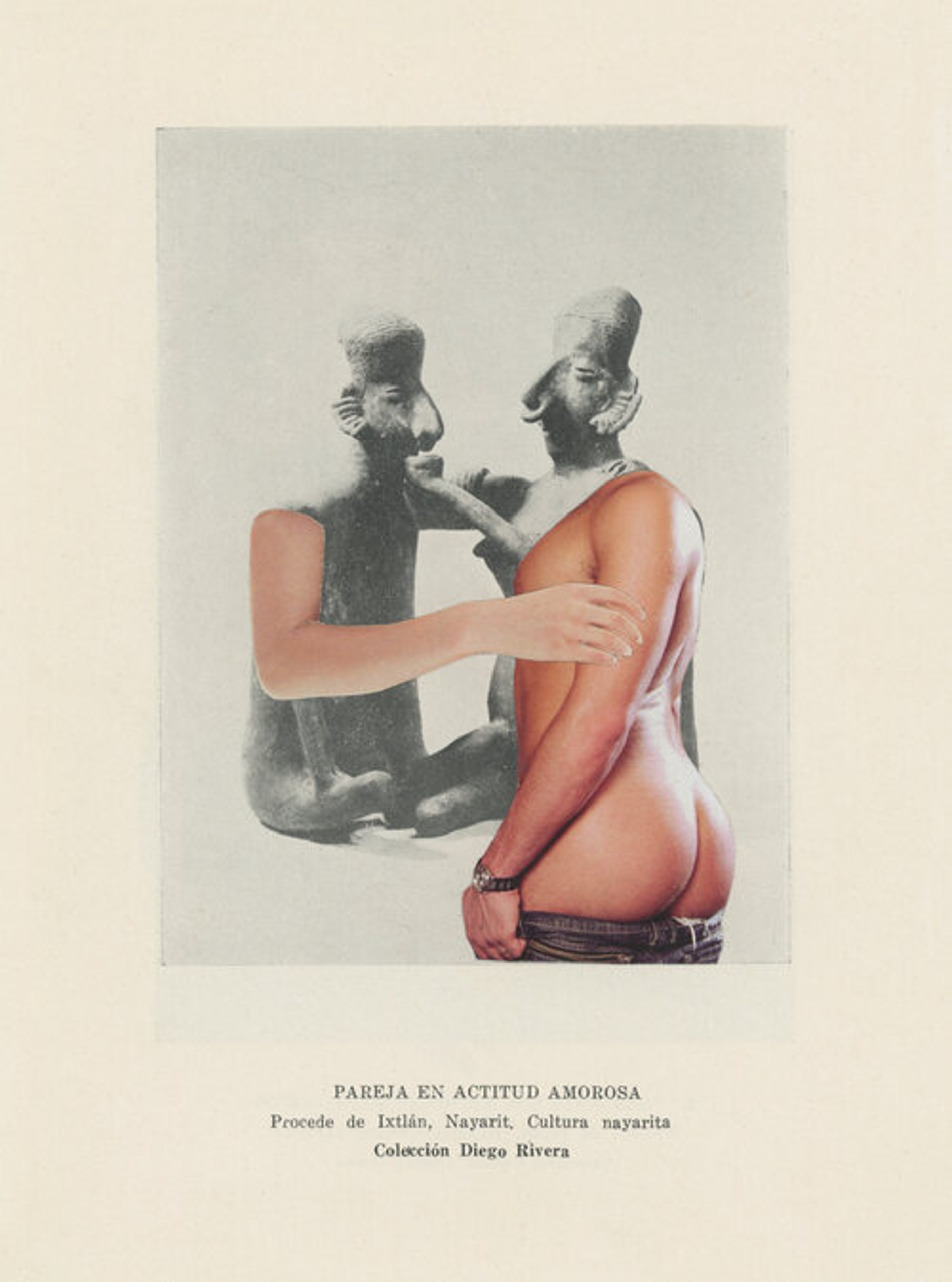
Fig. 5 – Felipe Baeza, "Pareja en Actitud Amorosa," from the series Gente del Occidente de México, 2017–2019. Double-sided collage on paper, 8 3/4 x 6 3/8 in. [Link to source]
In "Pareja en Actitud Amorosa" or "Couple in the Act of Love," touch becomes a source of wayward tension (Figure 6). While the right arms of the figures remain connected with clay, their left arms (again, coming from two different sources) press together, skin to skin, contact which can be interpreted in several ways. Recalling the extractive removal of the original ceramic figure from its original context alongside the association of pornographic imagery with deviance, we might think of this previous touch as unwanted, unsanctioned, illicit even. For the erotic source material in this collage, we might also think about the complexity of touch as something consensual though commodified as pornography. Together, there is a sensitivity in the mutual gaze of these fragmented figures, as well as sensuality through warm contact we might attribute to human desire. The composition itself again invokes a canon of classical painted representations of couples in the act of love, but its sensuality also relates to waywardness in its attempt to defy its previous dual objectification as both a static and so-called primitive ceramic figure and low brow erotic pulp.
The examples you have seen are just a few of the over eighty images comprising the Gente del Occidente de Mexico series. Earlier I mentioned Baeza’s desire to create a new archive from his source materials, and this took the form of reassembling the collaged pages of the book found in the New York City bookshop, binding it, and renaming it. Baeza chose to change part of original book’s title: Arte Precolombino del Occidente de Mexico. The word “gente” was swapped in for the original “arte Precolombino.” Rather than imbue his art with a static sense of objectivity through the use of the term “Precolumbian art”, the artist reanimates the series with living people, the gente, reminding us that this is not just a conversation about art, but about people too. This includes not just the people represented by the sculptures and the people who made them, but also the impoverished modern local population who supplement their income through looting tombs for ceramics subsequently sold to dealers. This narrative speaks to both items and people turned refugees by the ravages of neoliberal capitalism, in Mexico, the United Stated, Gaza, and beyond. Though their social lives are wrought with pain, exoticization, commodification, and other forms of oppression, the people of vastly different origins fragmented and recombined into the Gente del Occidente de Mexico series suggest that together, they are capable of resisting dominant structures of power.
-----------------------------------------------------------------------------
1. Dirección General de Educación Extra-Escolar y Estética, Salvador Toscano, Paul Kirchhoff, and Rubin Daniel F, Arte precolombino del Occidente de México: monografía que la Dirección General de Educación Estética publica con motivo de su exposición. México: Secretaría de Educación Pública, 1946.↩
2. Mary Miller, “The Body in Pieces,” In Adiós a Calibán, (Brooklyn, NY: Small Editions Publishing, 2022): 114.↩
3. Sandra Rozental, “On the Nature of Patrimonio: ‘Cultural Property’ in Mexican Contexts,” In The Routledge Companion to Cultural Property, edited by Jane Anderson and Haidy Geismar, 1st ed. (Routledge, 2017): 239.↩
4. Felipe Baeza, Interviewed by Sydney Barofsky, 2023.↩
5. For more on the use of West Mexican figures in Kahlúa ads, see Judy Sund, "Beyond the Grave: The Twentieth-Century Afterlife of West Mexican Burial Effigies," The Art Bulletin 82, no. 4 (2000): 734–767.↩
6. Michael Coe, “From Huaquero to Connoisseur,” in Collecting the Pre-Columbian Past: A Symposium at Dumbarton Oaks, 6th and 7th October 1990 (Washington, D.C: Dumbarton Oaks Research Library and Collection, 1993): 273.↩
7. Felipe Baeza, Interviewed by Sydney Barofsky, 2023.↩
8. Felipe Baeza, Interviewed by Sydney Barofsky, 2023.↩
9. Arjun Appadurai, “Museum objects as accidental refugees,” Historische Anthropologie 25, no. 3 (2017): 402.↩
10. “Unruly Bodies: Artist in Residence Felipe Baeza in Conversation with Laura Gutiérrez.” Interview by Laura Gutiérrez. Getty Institute, May 13, 2023.↩
11. Saidiya V. Hartman, Wayward Lives, Beautiful Experiments: Intimate Histories of Social Upheaval, (W.W. Norton & Company, Inc., 2019): 7.↩
